### The Pagan Roots of Easter and Its Controversial Adoption

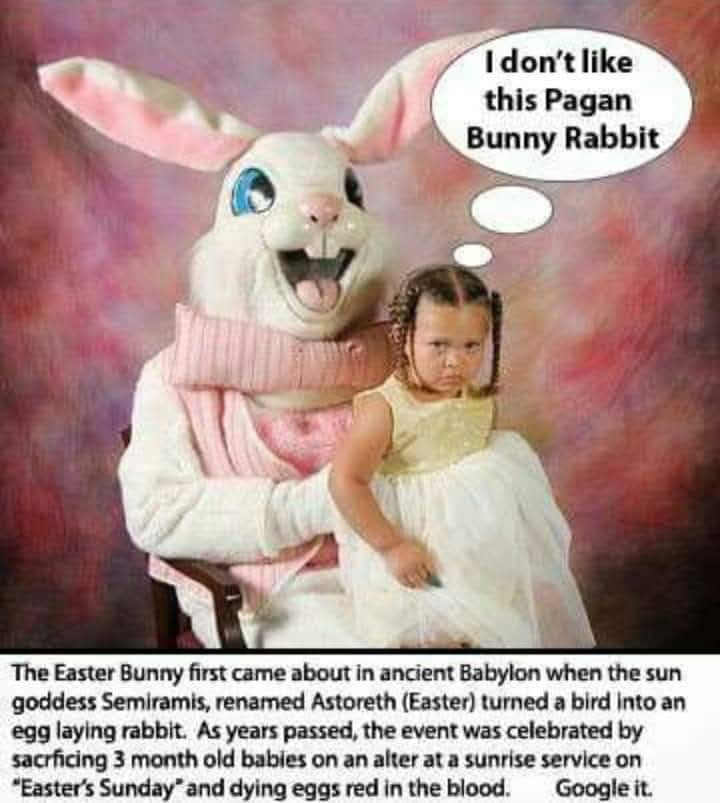
Easter, a festival celebrated by millions of Christians around the world, has been a subject of debate regarding its origins and the implications these origins have on its observance. Many argue that its roots lie in ancient pagan traditions and that the biblical teachings of Yahweh discourage the celebration of such festivals. This essay explores these themes, delving into the pagan influences on Easter, the stance of Yahweh as described in scripture, the practices of the Yahweh Temple, and the historical circumstances under which the Catholic Church incorporated Easter into Christian festivities.
#### Pagan Origins of Easter
The term “Easter” is thought to be derived from “Eostre,” the name of an Anglo-Saxon goddess associated with spring and fertility. In many ancient cultures, spring was celebrated as a time of rebirth and renewal, with various festivals held to honor nature and fertility. Symbols commonly associated with Easter, such as eggs and rabbits (which represent fertility), find their origins in these pre-Christian practices. The timing of Easter, which aligns with the vernal equinox, further reflects the blending of pagan traditions into the celebration of the resurrection of Jesus Christ.Many pagan traditions emphasized the cyclical nature of seasons and life, and as Christianity spread, these customs were often adopted or adapted to ease the transition for converts. This syncretism allowed the church to assimilate local customs, making it easier for pagan populations to accept the new religious framework.#### Yahweh’s Command Against Pagan PracticesIn the Hebrew Scriptures, Yahweh clearly instructs the Israelites to avoid adopting the customs of neighboring nations, particularly those tied to pagan worship. For instance, in Jeremiah 10:2, Yahweh advises, “Thus says the Lord: Do not learn the way of the nations, and do not be dismayed at the signs of the heavens.” This indicates a specific command against engaging in practices that resemble pagan rituals, a directive that many believe extends to Easter’s traditions.Furthermore, Deuteronomy 12:30-31 reinforces this warning, where it states, “Take care that you are not ensnared to follow them, after they have been destroyed before you, and that you do not inquire about their gods, saying, ‘How did these nations serve their gods?'” These passages highlight the belief that celebrating Easter, with its pagan roots, is incompatible with the commandments of Yahweh.
#### The Yahweh Temple Perspective
The Yahweh Temple, representing a community of believers who adhere strictly to the teachings of the Hebrew Scriptures, does not celebrate Easter. This group emphasizes a return to the biblical commandments and seeks to separate itself from traditions that have been influenced by paganism. They advocate for the observance of biblical feasts and festivals, such as Passover, which hold significant meaning directly tied to the faith’s foundational texts, rather than adopting customs that do not align with their understanding of scripture.
#### The Catholic Church’s Adoption of Easter
The Catholic Church’s decision to incorporate Easter into its liturgical calendar is believed to have begun in the early centuries of Christianity, particularly around the 2nd century. The Council of Nicaea in 325 A.D. established a unified date for Easter, but this was largely a reconciliation of existing celebrations rather than a brand-new institution. In essence, Easter was adapted and Christianized from earlier pagan festivals, representing both a continuity of old traditions and a new interpretation through the lens of Christianity.
#### Conclusion
The debate over Easter’s origins and its acceptance among various groups highlights the complexities of religious traditions and the influences of historical context. While many Christians embrace Easter as a celebration of Jesus’ resurrection, others, including those who follow the teachings of Yahweh, find its pagan roots and scriptural contraindications compelling reasons to abstain from its observance. The discussion invites a broader inquiry into how religious practices evolve and how communities navigate the interplay between history, belief, and ritual. Ultimately, understanding these dimensions enriches the dialogue surrounding faith and tradition in contemporary society.
Yahweh loves you, please pray to him.